
Tracing Gilmer County Former Owners
Begin with the newest deed naming the current grantee. Then step back to how that grantor acquired the parcel. Gilmer County's historic deed index reaches unusually far back. The modern online index never states its earliest year. The archival ranges describe collections that exist. They are not a promise that every volume or image survived.
| Source | Years It Covers | Where Held | What It Shows |
|---|---|---|---|
| County Clerk deed index | Modern web cutoff not stated | Gilmer Clerk IDX | Parties, date, instrument, book/page |
| Deed books | 1845-1902 in Archives inventory | Clerk / State Archives | Recorded conveyances |
| Deed index | 1845-1969 | Clerk / Archives microfilm | Name path into deed volumes |
| Wills and probate | Wills 1845-1969; other series vary | Clerk / Archives / WVU | Estate authority and transfer context |
Recent transfers start with the Clerk IDX. Older deeds need the 1845-1969 index, paired with the Archives and WVU finding aids to pin down a book or reel. Plats and tax sales are separate series. Their historical range is not fully stated. When a gap appears, search later deeds, releases, wills, and fiduciary records.
Walking Back Through Gilmer Deeds
A grantor conveys an interest. A grantee receives it. The chain of title is the ordered list of recorded transfers for one property. With the Clerk IDX, a searcher filters by party role and instrument type, and results return a date, document, book/page, page count, name, cross-date, and instrument reference. Record each reference before moving on.
- Find the latest deed showing the present grantee and save its date and book/page.
- Read the granting party and property description in that instrument.
- Search that grantor as a grantee to find the earlier purchase or transfer.
- Repeat while matching the legal description, not merely the names.
- Move to Archives or WVU reels when the index year or book requires it.
- Grantor / grantee
- The conveying party and receiving party in a recorded instrument.
- Chain of title
- The dated sequence of transfers for a particular tract.
- Legal description
- The land wording that can persist when a road address changes.
- Book and page
- A Clerk reference that points to the recorded volume location.
How Far Gilmer Ownership Reached
The State Archives traces Gilmer deed books to 1845. A separate deed index runs through 1969. The same listings cover trust deeds, release indexes, delinquent tax sales, wills, inventories, and court records. The Clerk publishes no cutoff date for its current online index, so the archival range stands as the reliable span for deeper ownership work. Original patents and complete early deed images are not available online either. Lean on the archival index.
Lawful use. Former-owner research in Gilmer County can support house history, title work, and property diligence. Do not use an old or current owner’s address to track, threaten, or harass anyone.
Gilmer’s Historic Deed Collections
Deeds span 1845 to 1902. The deed index spans 1845 to 1969. Trust deeds cover 1894 to 1903, while a releases index runs from 1879 to 1949 and releases themselves from 1879 to 1896. Delinquent tax sales cover 1848 to 1872. Wills stretch from 1845 to 1969. Inventories begin even earlier, in 1800. Each series answers a different slice of an older transfer, so a gap in one list may close through another.
Use the State Archives finding aid and the WVU inventory to identify the reel, then ask the repository about onsite access or copies. The County Clerk remains the starting point for current books and instruments. A series date does not prove a specific person's record survived. Cite the volume, index, or reel you find. The State Archives inventory lists the deed books, deed index, releases, wills, and tax-sale reels.
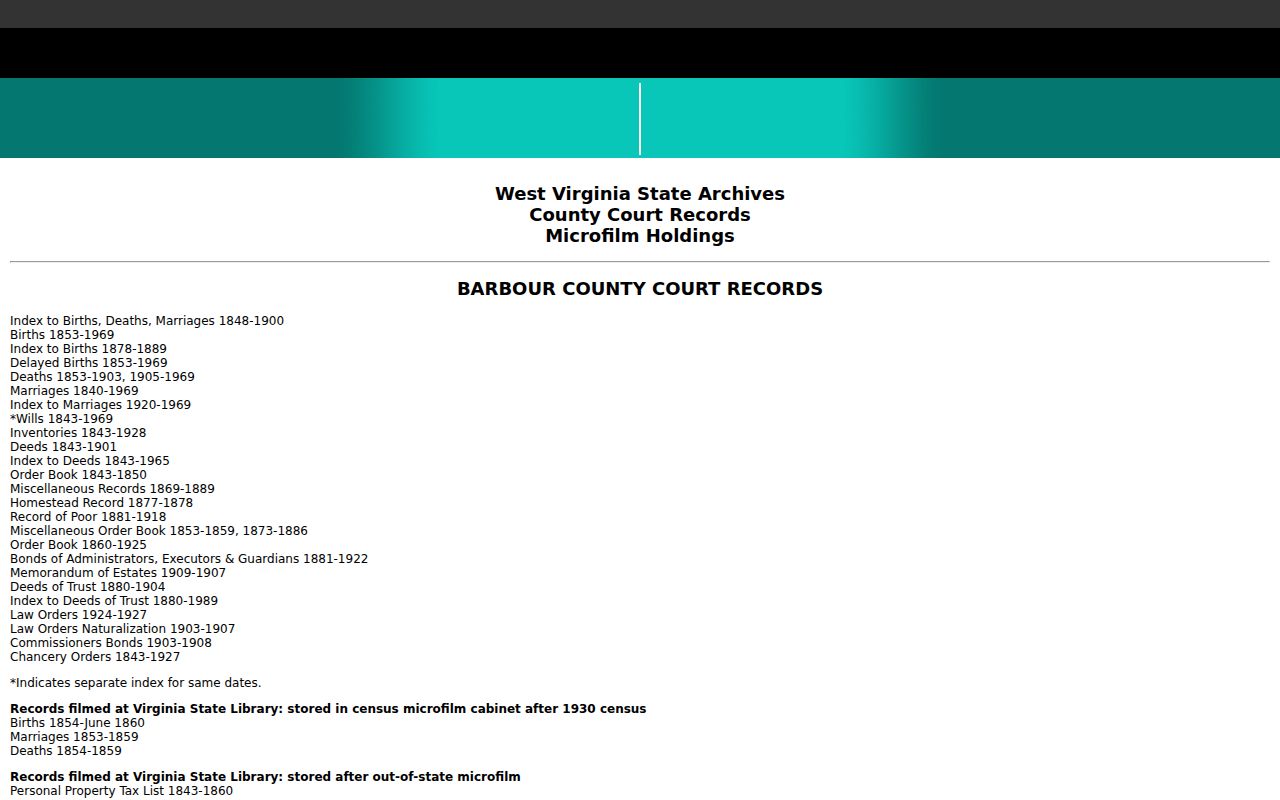
Let the archival list narrow the year and series first.
What the 1888 Fire Changes
The State Archives finding aid records an 1888 courthouse fire. Treat it as a warning about possible gaps and reconstruction, not as proof that a named deed was destroyed. Search the index and other book series, then read later instruments for recitals of earlier conveyances. A deed may refer back to a prior owner even where the earlier document is hard to locate.
WVU’s Regional History Center lists Gilmer reels for county history and office inventories, Order Book No. 1 from 1845 to 1849, and Order Book No. 2 with births, deaths, and wills. Those records can supply context when the land chain crosses an estate or court process. The WVU finding aid identifies the local reel descriptions.
The WVU Gilmer reel inventory helps locate the early order-book material.
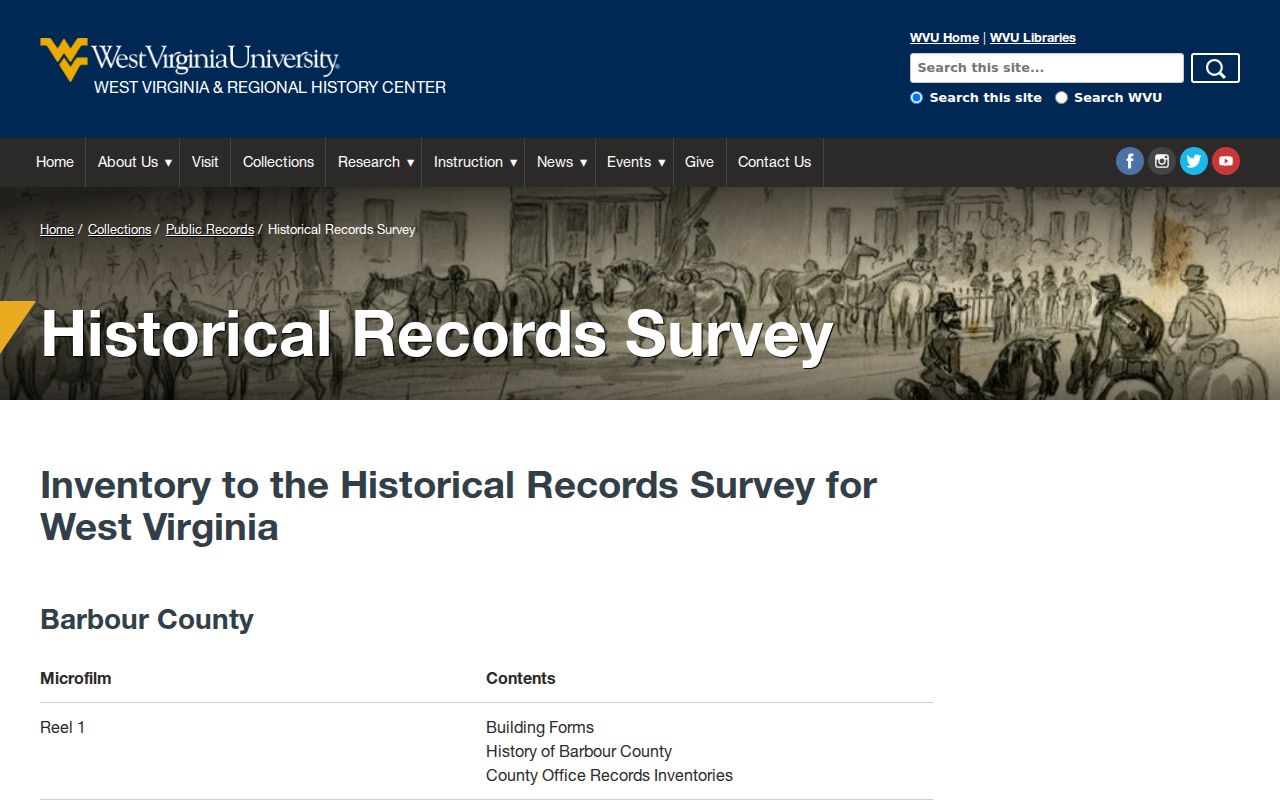
When a deed chain shows a gap, the reel list points to an archival source in Gilmer County that may cover the missing link.
Probate Paths in an Ownership Chain
A former owner's death can interrupt the deed chain. A will or estate may sit between deeds. The Clerk IDX includes Will, Petition an Estate, Appointment, Fiduciary, Inventory, Settlement, Small Estate, Affidavit of Heirs, and beneficiary affidavit categories for transfer-on-death deeds. Search the deceased party and the personal representative. Then locate the deed, affidavit, or court order that ties the estate to the parcel.
A will states intent only. It never replaces the transfer record. Appointment papers show authority, an inventory may identify assets, and a settlement shows final distribution. Follow the instrument that cites the legal description and names the grantee appearing next in the deed index. Keep every step in date order, so a probate filing never gets mistaken for a sale deed.
Name Variants and Rural Descriptions
A name in an old index rarely looks tidy. Gilmer County records show initials, changed surnames, and estate labels. The same tract may also carry trustee roles and personal representatives over time. Run the likely variants. If the IDX offers a "Sounds Like" option, use it too. Then compare the book-and-page citations and the legal description before trusting a match. Rural parcels in Gilmer often carry no street number at all. Instead, the deed calls out a creek, a road, or an adjoining tract. It may also reference a right of way or metes and bounds. Those descriptions, together with the recorded plat, hold the chain of title steady. Postal names drift, but the record stays anchored.
Glenville parcels along the downtown and river corridor can keep old deed references. They hold them long after street patterns shift. In Sand Fork, older instruments may say Layopolis, so try both spellings. Neither label confirms present municipal limits. The land description itself carries the record across changing community terms.
Old Tax Names Are Not the Deed Chain
A tax roll answers to its own calendar. An assessment can still list a former owner of record after a transfer. That lag can run well past the July 1 update. A historical tax ticket may name the account or parcel. It still cannot replace the grantor-grantee sequence in the deed records. Treat the assessment and GIS map as tools for locating the tract. Turn to the Clerk's deed to establish the recorded transfer. A probate instrument or a court order can also do it. For current party roles and instrument references, the Gilmer deed-record search is the right entry point. The present owner page explains how to read the assessment date on a current roll. This history page keeps its focus on the backward chain and archival depth. It also helps with reconstructing an older reference.
Use Probate Records to Bridge a Name Change
A gap between two deeds is not always a missing deed. Sometimes the transfer passed through an estate. The Gilmer County probate index includes wills, fiduciary records, inventories, settlements, affidavits of heirs, small-estate material, and transfer-on-death beneficiary affidavits. It also covers transfer-on-death beneficiary affidavits. Search the deceased owner first. Then search likely representative names. Compare the property description and dates against the next deed in the chain. A will states an intended distribution. The later filed deed, affidavit, or court instrument records the step that actually connects title.
For older ownership, the State Archives holds deed books spanning 1845 to 1902. It also holds a deed index spanning 1845 to 1969. Its inventory notes an 1888 courthouse fire. WVU's Regional History Center lists county reels of early order books. It also lists vital and will materials. Neither span guarantees complete online coverage. When the same name repeats across decades, rely on the parcel's legal description, its road or creek calls, and book-and-page references to separate your tract from a similar namesake.