
Finding a Gilmer County Property Owner
Gilmer County rewards a simple sequence. Run from address to assessment parcel to owner of record to the recorded deed in the county deed records. The statewide assessment search accepts a street, owner, parcel number, deed book and page, or legal description. The Property Viewer maps an E-911 address. Its brief result may list only one owner, though. Once the parcel is settled, pull the latest deed from the Clerk index and check the grantee name and land description against the tax roll.
- Find the parcel with the Assessor street, owner, or parcel search.
- Read the owner and mailing address, while noting the roll’s assessment date.
- Search the Clerk IDX for the latest conveyance to confirm recorded grantees.
- If an entity is named, use the WV business search to interpret its registered agent or officers.
- Use the mailing address only for a lawful property matter and do not treat it as the parcel location.
Sources for a Gilmer County Owner Search
Each office records a different event. That is why a Gilmer County property search can return different names for the same land. The assessor roll is a tax record. The Clerk index names parties to recorded deeds. The viewer links a parcel to map and assessment details, and the Secretary of State describes registered business entities, so tie every result to the legal description rather than to a familiar name.
| Source | Owner Info It Gives | Access |
|---|---|---|
| Assessor roll | Owner of record, situs, mailing, deed reference, and tax fields | Free WV assessment search |
| County Clerk IDX | Grantor/grantee, instrument, date, and book/page | Free index search; image fee unstated |
| WV Property Viewer | Parcel polygon, physical address, and one summary owner | Free online map |
| WV business search | Registered office, agent/officer, and entity filings | Free search; paid CSV option |
An owner of record is a name on an official tax or recorded instrument. It is not who lives there. The mailing address handles notices, and it may belong to a trustee, an LLC, an estate representative, or a second home. Occupant and owner are different facts.
Limits of a Gilmer County Owner Lookup
Ownership questions have limits. The public record can narrow who owns a property in Gilmer County, but it cannot always settle the matter. The assessment roll can lag behind a recent deed because taxes attach to the July 1 owner of record. An index can miss a name variant. A document may not be online at all. The map display can drop co-owners, so for title priority read the latest instrument along with any later release, estate filing, or court order.
Lawful use. A Gilmer County owner lookup is for property research, purchase diligence, and civic use. Do not use public names or mailing addresses to stalk, threaten, harass, or target anyone.
The Gilmer County Owner-of-Record Date
West Virginia fixes the assessment date at July 1. Gilmer County taxes are assessed to the owner of record on that day. Record after that date and the roll may still show the prior owner. The county publishes no average update interval. After a recent closing, compare the current roll with the newest recorded deed yourself rather than trusting either one alone.
The Assessor sets fair-market value each tax year. True-and-actual value gets annual adjustments inside a three-year physical review cycle. That makes the roll a solid finding tool. It is not a live ownership feed. Answering who owns the property now means recording the roll year and the deed date separately before you rely on either figure.
Confirming the Name in the Deed Index
The Clerk IDX keeps Deeds, Liens, Fiduciary, UCC, and other indexes separate. You can also pick a party role. Grantor or grantee are the common choices. A grantee receives the interest; a grantor conveys it. Search the likely owner as grantee, note the instrument date and book and page, then read the legal description closely. If the deed names a different parcel or a prior owner, follow the index from that party instead of guessing.
A recorded deed proves what was filed. It does not prove the interest still stands. A later release, probate transfer, or court action may have changed it. When the deed records and the tax roll disagree, confirm with the Clerk and the Assessor, and remember the goal is ownership of one parcel, not a list of people tied to an address.
Mailing Address as a Gilmer Clue
The Assessor keeps two addresses. One is mailing, one is situs. The mailing line may reveal an owner living elsewhere, an LLC's business address, a trustee's office, or an estate representative. The WV Property Viewer documentation says a selected parcel's detail can show the owner's address even when the map list displays only a physical address. That gap is often the practical clue. A street lookup finds the land but not the contact name.
Treat the mailing field as a clue. It is not proof of occupancy. P.O. boxes and rural routes receive tax bills. They simply will not resolve in the viewer's E-911 address search. Match the parcel ID and legal description before joining that address to an owner record in the property records.
Gilmer LLC, Trust, and Estate Names
Deeds sometimes name a trustee, an LLC, a fiduciary, or an estate. Sometimes they name one of these rather than a person. When that happens, the WV Business Organization Search is the next stop. It takes queries by organization or by agent, officer, or name. A percent sign works as the wildcard. Pull up the entity. You may find its registered office, process address, officers, incorporators, annual reports, and amendments.
Those fields show who accepts legal notices for the company. They do not prove ownership. An officer listed with the state is not automatically the owner of record. The deed controls that question.
Estate files open another door. The Clerk keeps wills, fiduciary appointments, inventories, settlements, Affidavit of Heirs, small-estate filings, and transfer-on-death beneficiary affidavits. A deceased owner can show up in Gilmer County property records. Search the land and fiduciary categories together when one does. Then verify the filed instrument that ties the estate to the land. The WV organization search helps explain a company name on a deed. The state business search form accepts organization and agent queries for any entity grantee.
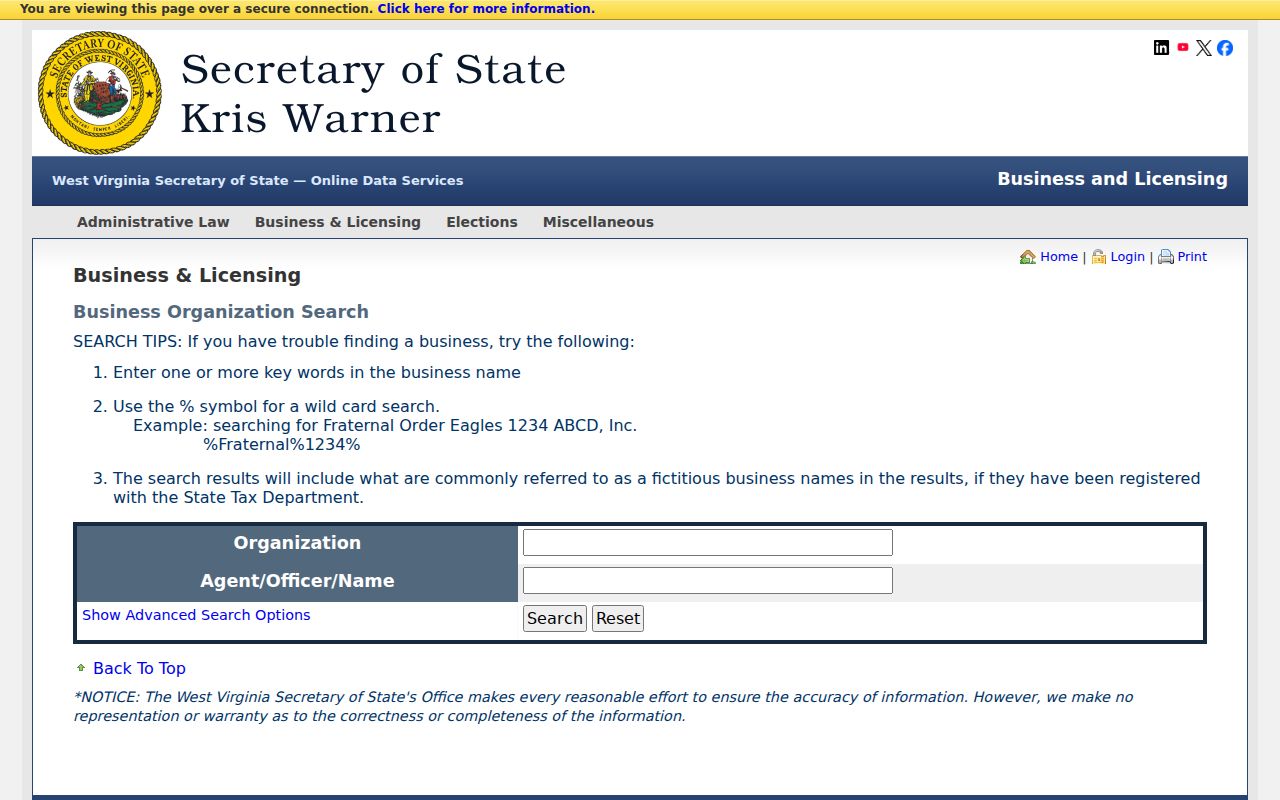
Use the state entity details to read a deed party correctly, then go back to the parcel's recorded land documents.
What the Viewer Owner Field Omits
The state viewer's short parcel result shows a single owner. A deed can vest several. That gap trips people up. Open the parcel details and the linked assessment report, then inspect the recorded deed for joint names, trustee capacity, or an entity before assuming the map line is a complete roster of interests.
The viewer also splits the owner address from the physical address. It can link out to assessment details too. Handy for navigation, yes. But the Clerk's recorded deed records remain the place to confirm who was named as grantor or grantee in Gilmer County. Treat the parcel map and owner summary as clues. They point to the next search, not a final title determination. The WV parcel-detail view displays the owner and physical-address sections once a parcel is opened.
Check the underlying deed whenever another owner or vesting detail could be missing from the summary.
Confirm a Name Across the County Records
Start with the parcel in the Gilmer County assessment roll. Write down the owner name, mailing address, physical address, value, deed book and page, and full parcel number. Then take that citation to the Clerk's IDX and read the instrument's vesting clause. One caution applies here. The assessment roll reflects the owner of record on July 1, so a deed recorded later may be newer than the name on that annual tax roll. The parcel viewer's quick card may also show a single owner, so check the detailed assessment and the recorded deed before concluding the visible name is the only party.
For a trust, estate, or limited liability company, search the property by its exact parcel first. Then search the entity name separately. The state Organization and Agent/Officer/Name system can explain a company's registered office and listed officers, though a registered agent is a service contact rather than proof of beneficial ownership. Estate-related Clerk categories include wills, fiduciary material, inventories, affidavits of heirs, and transfer-on-death beneficiary affidavits. Used together, these deed records and roll entries clarify whether a name is an individual, a fiduciary, or an organization without turning a database label into a title opinion.